Agent
why do we have multi agent systems?
why is it important to learn the components of AI agents ?
models (o1,o3-mini, GPT-4o)
core intelligence capable of reasoning, making decisions, and processing different modalities.
tools(function calling, web search, file search, MCP)
interface to the world, interact with environment, function calling, built-in tools
n8n
knowledge and memory (vector store, file search, embedding)
augment agents with external and persistent knowledge
knowledge base(static memory)、persistent memory
audio and speech (audio generation, realtime)
create agents that can understand audio and respond back in natural language
guardrails (moderation, instruction, hierarchy)
prevent irrelevant, harmful, or undesirable behavior
orchestration (agents sdk, tracing, evaluations, fine-tuning)
develop, deploy, monitor, and improve agents
sub agent
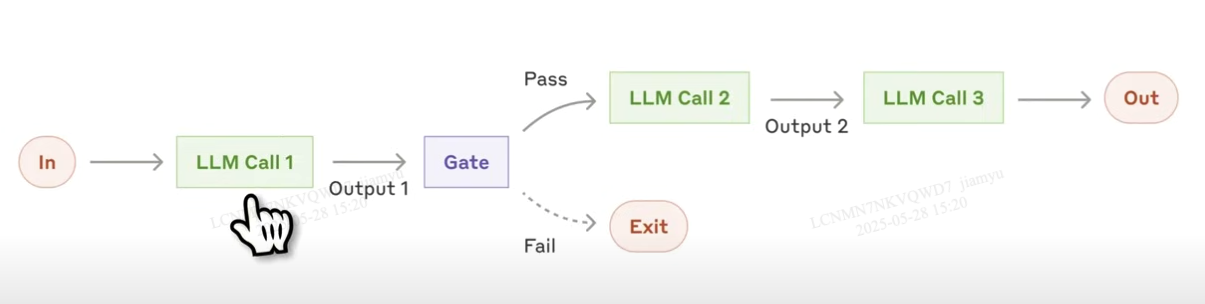
prompt chaining
prompt chaining decomposes a task into a sequence of steps, where each LLM call processes the output of the previous one.
routing
routing classifies an input and directs it to a specialized followup task. this workflow allows for separation of concerns, and building more specialized prompts.
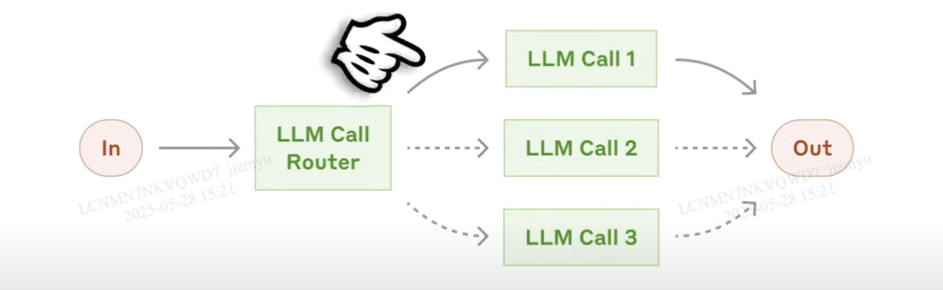
when to use this workflow: routing works well for complex tasks where there are distinct categories that are better handled separately, and where classification can be handled accurately, either by an LLM or a more traditional classification model/algorithm.
作用
- 接收和处理输入:Agent 负责接收用户的输入
- 调用语言模型:Agent 使用语言模型来生成响应或完成任务。
- 生成响应:Agent 根据语言模型的输出生成响应或完成任务。
- 与用户交互:Agent 可以与用户交互,例如通过对话式界面或命令行界面。
- 管理会话状态:Agent 可以管理会话状态